
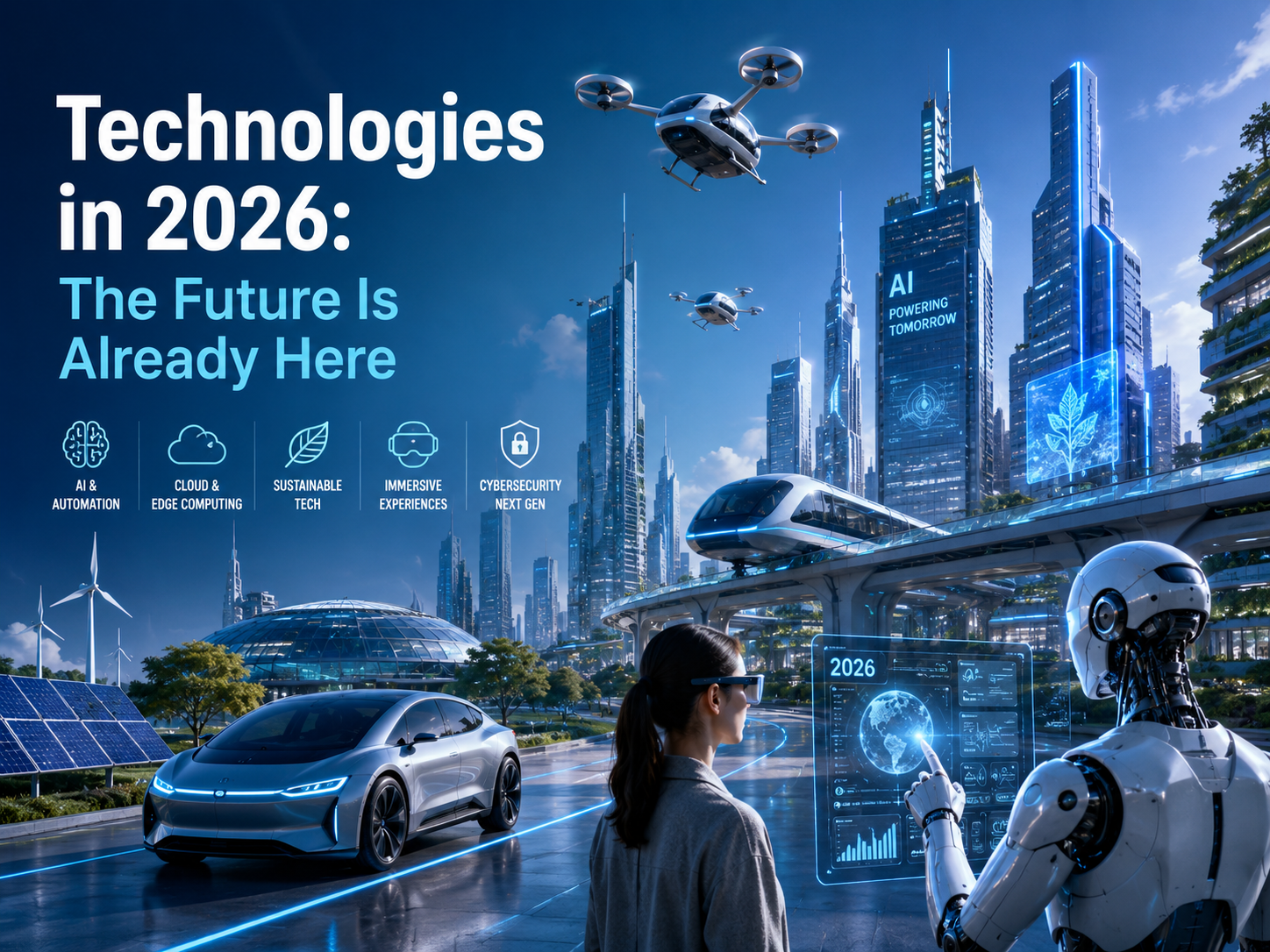
Technologies in 2026: The Future Is Already Here
The year 2026 marks a turning point in how technology shapes our daily lives, businesses, and societies. What once seemed futuristic—AI assistants, autonomous systems, immersive digital worlds, and quantum computing—is now becoming mainstream. Across industries, technology is evolving faster than ever, creating new opportunities while also raising important questions about ethics, privacy, and sustainability.
In this blog post, we’ll explore the most important technologies defining 2026 and how they are transforming the world.
1. Artificial Intelligence Everywhere
Artificial Intelligence (AI) is no longer just a tool for tech companies. In 2026, AI has become deeply integrated into everyday life.
From smart personal assistants managing schedules to AI-powered healthcare systems detecting diseases earlier than doctors, AI is improving efficiency and decision-making across industries.
Key Trends:
- Generative AI creates text, images, music, videos, and even software code.
- AI Agents can complete complex tasks independently.
- Personalized AI adapts to individual users’ habits and preferences.
- AI in education provides customized learning experiences for students.
Businesses now rely heavily on AI automation to reduce costs and increase productivity. However, concerns about job displacement and responsible AI usage continue to grow.
2. Quantum Computing Becomes Practical
Quantum computing has moved from experimental labs into practical business applications. While traditional computers process information in binary (0s and 1s), quantum computers use qubits, enabling them to solve highly complex problems much faster.
Industries Benefiting:
- Pharmaceutical research
- Climate modeling
- Financial forecasting
- Cybersecurity
- Logistics optimization
Although still expensive and specialized, quantum technology is beginning to reshape scientific research and advanced computing.
3. The Rise of Extended Reality (XR)
Virtual Reality (VR), Augmented Reality (AR), and Mixed Reality (MR) have merged into what is now commonly called Extended Reality (XR).
In 2026, lightweight smart glasses and immersive headsets are replacing many traditional screens.
Popular Uses:
- Virtual workplaces and meetings
- Immersive gaming experiences
- Digital classrooms
- Virtual tourism
- Retail shopping with AR previews
The line between digital and physical experiences is becoming increasingly blurred.
4. 6G and Hyper-Connected Networks
While many countries are still expanding 5G infrastructure, 6G technology is already emerging in advanced markets.
What 6G Brings:
- Ultra-fast internet speeds
- Near-zero latency
- Improved AI connectivity
- Smarter smart cities
- Real-time holographic communication
This next-generation connectivity supports autonomous vehicles, remote surgeries, and massive Internet of Things (IoT) ecosystems.
5. Sustainable Technology and Green Innovation
Climate change has accelerated investment in green technologies. In 2026, sustainability is no longer optional—it is a business priority.
Major Innovations:
- AI-powered energy optimization
- Carbon capture systems
- Electric and hydrogen-powered vehicles
- Smart energy grids
- Eco-friendly data centers
Tech companies are focusing on reducing carbon footprints while developing cleaner manufacturing processes.
6. Biotechnology and Human Enhancement
Biotechnology is advancing rapidly, especially in healthcare and genetics.
Breakthrough Areas:
- Gene editing treatments
- Personalized medicine
- AI-assisted drug discovery
- Wearable health monitoring devices
- Brain-computer interfaces
People can now monitor health metrics in real time through smart implants and wearable devices, helping prevent diseases before symptoms appear.
7. Cybersecurity in the AI Era
As technology advances, cyber threats become more sophisticated. In 2026, cybersecurity is one of the world’s fastest-growing industries.
Emerging Security Technologies:
- AI-powered threat detection
- Zero-trust security systems
- Quantum encryption
- Biometric authentication
- Decentralized identity systems
Organizations are investing heavily in protecting data privacy and digital infrastructure from cyberattacks.
8. Robotics and Automation
Robots are becoming smarter, more affordable, and more capable.
Common Applications:
- Warehouse automation
- Delivery robots
- Agricultural drones
- Household assistants
- Healthcare support robots
Automation is helping industries improve productivity, though it also requires workers to adapt and learn new skills.
Challenges Facing Technology in 2026
Despite incredible progress, technological growth also presents challenges:
- Data privacy concerns
- AI ethics and misinformation
- Digital inequality
- Job displacement from automation
- Environmental impact of large-scale computing
Governments, businesses, and communities must work together to ensure technology benefits everyone fairly and responsibly.
Conclusion
Technology in 2026 is smarter, faster, and more connected than ever before. Artificial intelligence, quantum computing, immersive realities, biotechnology, and sustainable innovation are reshaping how people live and work.
The future is no longer something distant—it is unfolding right now. Those who adapt, learn, and embrace these advancements will be best positioned to thrive in this rapidly changing digital era.
As we move forward, the true challenge is not just building powerful technologies, but ensuring they improve human lives in meaningful and ethical ways.